


Manage portfolio emissions
Private equity firms need to track ESG performance across portfolio companies - for LP reporting, value creation, and increasingly, for regulatory compliance. But most firms are stitching together data from different sources, formats, and levels of completeness across their portfolio.
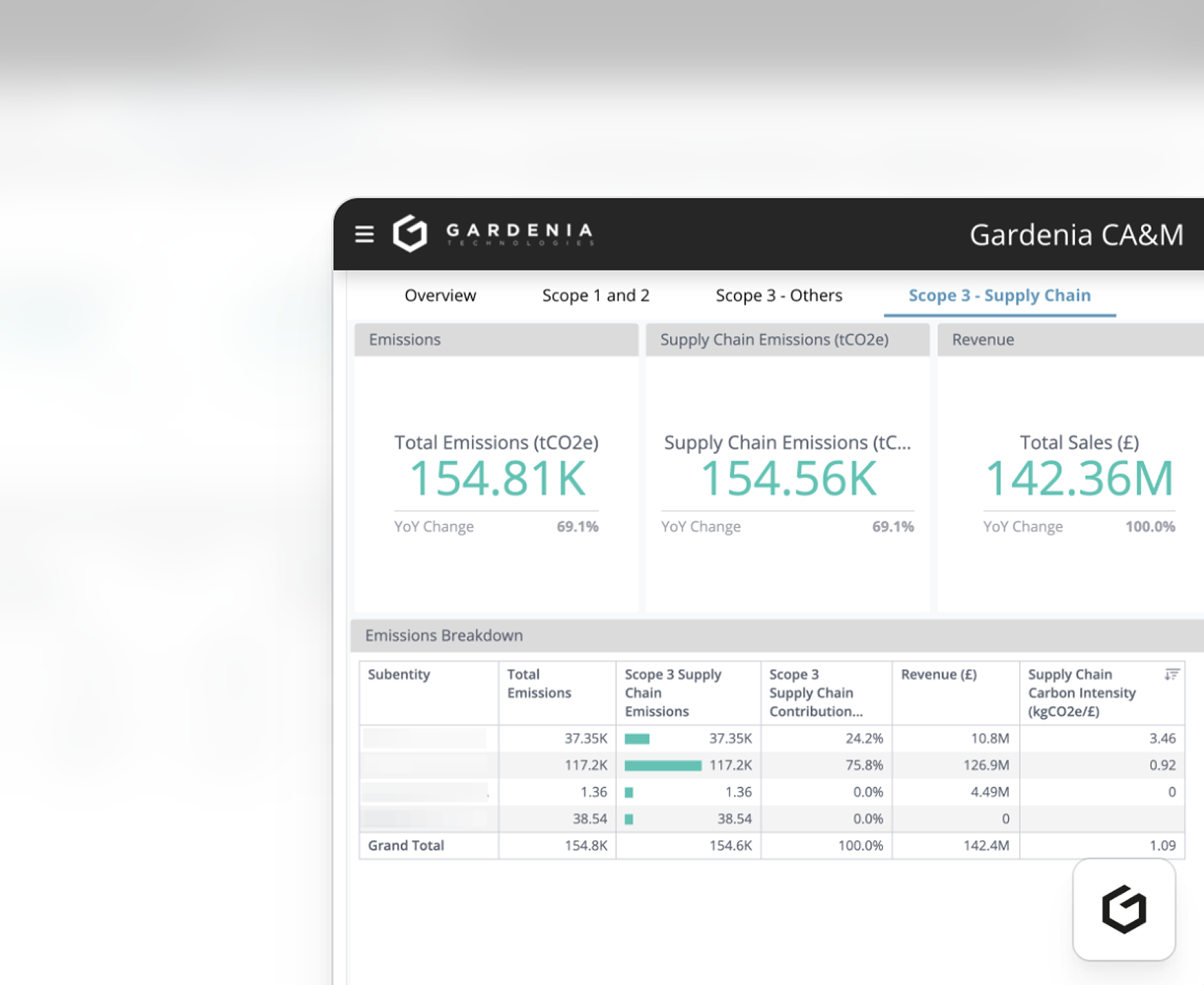
Gardenia provides a fund-level view that lets you compare portfolio companies side-by-side, identify which companies need support, and track improvement over time.
What you can do at the fund level:
- Compare portfolio companies - See emissions, carbon intensity, energy intensity, and fossil fuel usage across all portfolio companies in one view
- Identify leaders and laggards - Portfolio overview chart shows which companies have high emissions relative to revenue
- Track fund-level metrics - Total emissions, carbon intensity, energy intensity, fossil fuel usage across the entire portfolio
- See emissions over time - How portfolio emissions have changed year-over-year as companies grow or as you make acquisitions
- Analyse by multiple dimensions - Sort by emissions contribution, revenue contribution, or carbon intensity to prioritize where to focus
- Drill into specific companies - Click any portfolio company to see their detailed emissions breakdown
What portfolio companies get:
Each portfolio company gets their own comprehensive carbon accounting dashboard with:
- Full Scope 1, 2, and 3 emissions tracking - Broken down by category, with emissions intensity and offsetting cost
- Supplier and product-level insights - See which suppliers and products drive Scope 3 emissions, with carbon intensity per unit
- Automated reporting - Download CSRD, SECR, or annual carbon accounting reports
- Target setting and tracking - Set emissions reduction targets and monitor gap-to-target progress
Why it matters:
Most PE firms only get emissions data once a year when portfolio companies complete their annual inventory - usually in different formats, with different levels of detail, and with varying quality. By the time you consolidate everything, it's too late to influence the year's performance.
With consolidated tracking, you can see which portfolio companies are on track and which need support. Maybe Company J represents 44% of fund emissions but only 8% of revenue - that's a value creation opportunity. Or Company B has high emissions but also high fossil fuel usage - specific intervention point.
For portfolio companies, having standardised tracking across the fund means they're not each building their own carbon accounting process from scratch. They get the same quality of data and reporting tools, regardless of company size.


.png)

.png)


